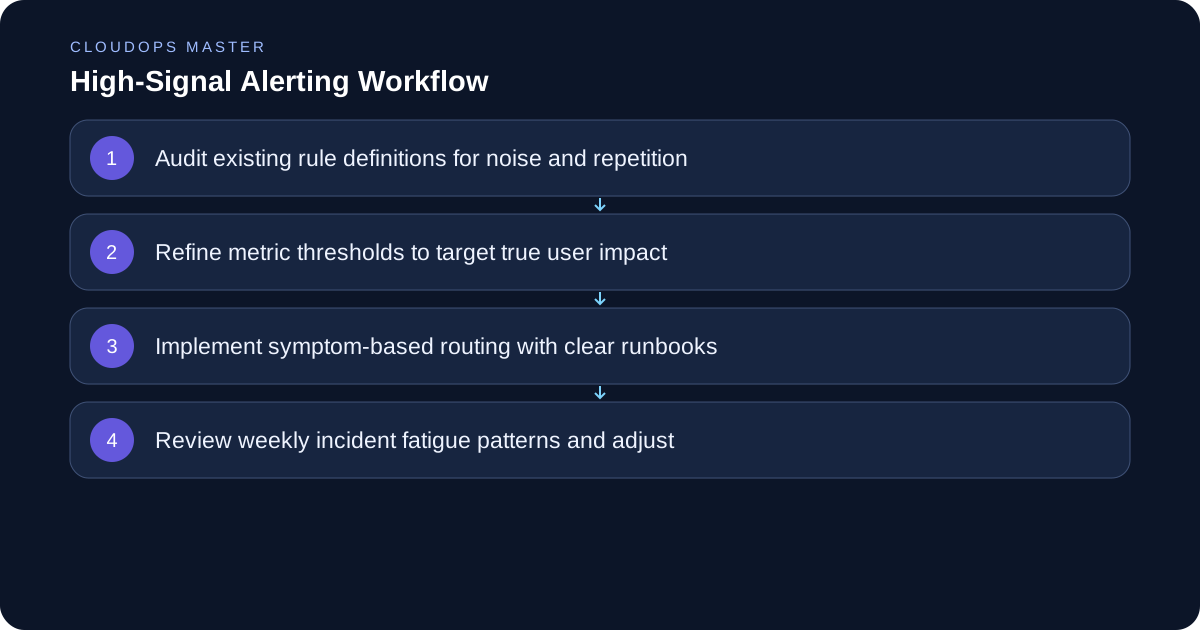
Monitoring systems are meant to protect production environments, but poorly designed alerts often achieve the exact opposite. When on-call engineers are bombarded with dozens of non-actionable notifications every night, fatigue sets in. Critical signals get ignored, response times lengthen, and system reliability degrades. Building a sustainable alerting strategy requires shifting focus from internal component health to genuine user impact. This approach reduces noise, respects human attention limits, and ensures that when an alert fires, it demands immediate attention.
Moving from Cause to Symptom Monitoring
Traditional alerting often relies on tracking underlying causes, such as high CPU utilization, memory pressure, or disk usage warnings. While these metrics matter during debugging, they rarely indicate a current failure by themselves. A server running at ninety percent CPU utilization is not necessarily failing if requests are processed quickly and error rates remain near zero. Alerting on causes generates a massive volume of false positives.
Instead, modern SaaS systems should prioritize symptom-based monitoring. Focus primarily on metrics that reflect the user experience, such as elevated HTTP five hundred error rates, prolonged latency percentiles, or dropped transaction completions. If a resource constraint does not directly degrade the customer experience or breach a formal service level objective, it belongs in a dashboard rather than an urgent notification channel. This distinction separates operational noise from true operational incidents.
Establishing SLOs and Error Budgets
Service Level Objectives provide the mathematical foundation for healthy alerting. Without clear objectives, every minor fluctuation feels like an emergency. By defining acceptable availability and latency targets over a rolling window, engineering teams establish an error budget. Alerts should fire when the consumption rate of that error budget threatens service reliability within a specific timeframe.
Multi-window, multi-burn-rate alerts offer a reliable mechanism for this strategy. For example, an alert can trigger if two percent of the error budget is consumed in five minutes, or if five percent is consumed over an hour. This pattern catches both sudden catastrophic outages and slow, creeping degradations while ignoring isolated, transient spikes that resolve themselves without intervention.
Standardizing Runbooks and Routing
An alert without a clear remediation path is just an interruption. Every production alert must include a link to a concise runbook that outlines diagnostic steps, verification commands, and escalation paths. If an engineer receives a page at three in the morning, they should not have to guess what system generated the signal or how to query the relevant logs.
Routing rules must also reflect organizational ownership. Sending infrastructure warnings directly to product engineers creates confusion, just as paging platform teams for application-level logic errors wastes time. Route alerts strictly based on who has the context and authorization to resolve the underlying issue. Keep notification channels clean, structured, and integrated with existing incident management tooling.
Practical Alert Tuning Checklist
- Audit all existing alerts and categorize them by true user impact versus internal resource utilization.
- Remove any alert that fires more than three times a week without requiring manual human intervention.
- Ensure every remaining production alert includes a verified runbook link and explicit escalation path.
- Implement multi-window burn rate alerts for critical service level objectives to catch rapid regressions.
- Schedule a monthly alert review meeting to evaluate false positive rates and prune stale rules.
Knowing When This Advice Does Not Apply
While symptom-based alerting and error budgets work exceptionally well for distributed SaaS applications, these practices require modification in specialized environments. For instance, safety-critical embedded systems, real-time industrial control software, or strict financial clearing platforms often require immediate notification of specific hardware faults or threshold breaches, long before a customer experiences a failure. In these domains, the cost of an undetected hardware degradation outweighs the risk of alert fatigue. Assess your system architecture and regulatory requirements before stripping out cause-based warnings.
Conclusion
Designing useful alerts is an ongoing engineering discipline, not a one-time configuration task. By prioritizing symptom-based metrics, leveraging error budgets, and maintaining rigorous runbook standards, teams can eliminate alert fatigue and preserve team morale. A quiet pager is not a sign of blind luck; it is the direct result of deliberate, high-signal infrastructure design.